Osaka in Summer: Heat-Smart Areas, Things to Do and Where to Stay
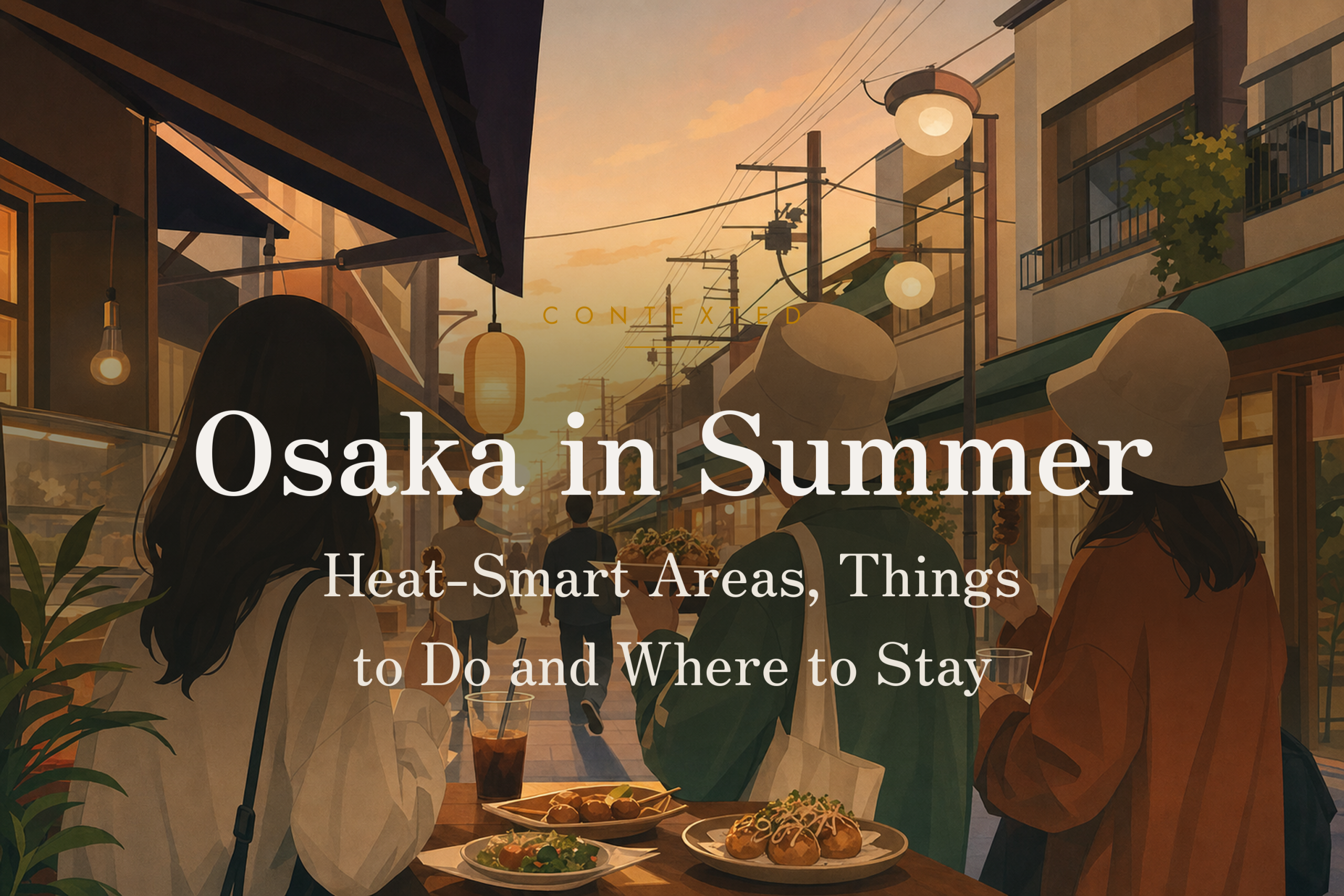
Osaka in summer is enjoyable if you plan around the heat: start outdoor sights by 8–9am, retreat indoors from late morning, and eat in lively neighbourhoods after sunset. For families and groups, Tennoji, Teradacho and Tsuruhashi are practical bases, with short rail journeys to Namba, Umeda and Shinsekai.
What is Osaka in summer really like?
Osaka in summer is hot, humid and often rainy. June brings the rainy-season pattern; July and August can feel sticky from morning, with strong sun and sudden showers. September can still be warm. Check daily heat-alert and thunderstorm forecasts, especially with small children or older relatives.
Osaka is compact by big-city standards, so you do not need to cross town at 2pm because something looks nearby on a map. JR stations, department stores, underground shopping streets and cafés provide frequent resets. Outside Tsuruhashi Station, you may smell charcoal-grilled yakiniku; inside a basement food hall, the chilled air can feel like another city.
Build your day around the hottest hours
For Osaka Castle Park, Shinsekai or Kuromon Market, aim for opening time or the first two morning hours. Kuromon is generally easier before late morning, when tour groups gather around skewers and seafood stalls. Stall hours vary, and snacks often cost roughly ¥500–¥2,000 depending on your order.
Between about 11am and 4pm, plan an aquarium, museum, department-store lunch or hotel rest. Refillable water, a small towel and a portable fan are more useful than another pair of sandals. Convenience stores are everywhere, with cold drinks usually around ¥100–¥250.
- Buy an IC card or use contactless payment for trains to avoid queuing in the heat.
- Carry a light rain jacket rather than relying only on an umbrella in crowded streets.
- Reserve timed-entry attractions ahead during school holidays and weekends where available.
- Schedule a seated lunch; standing snacks alone can wear a group down.
What is the best area in Osaka in summer?
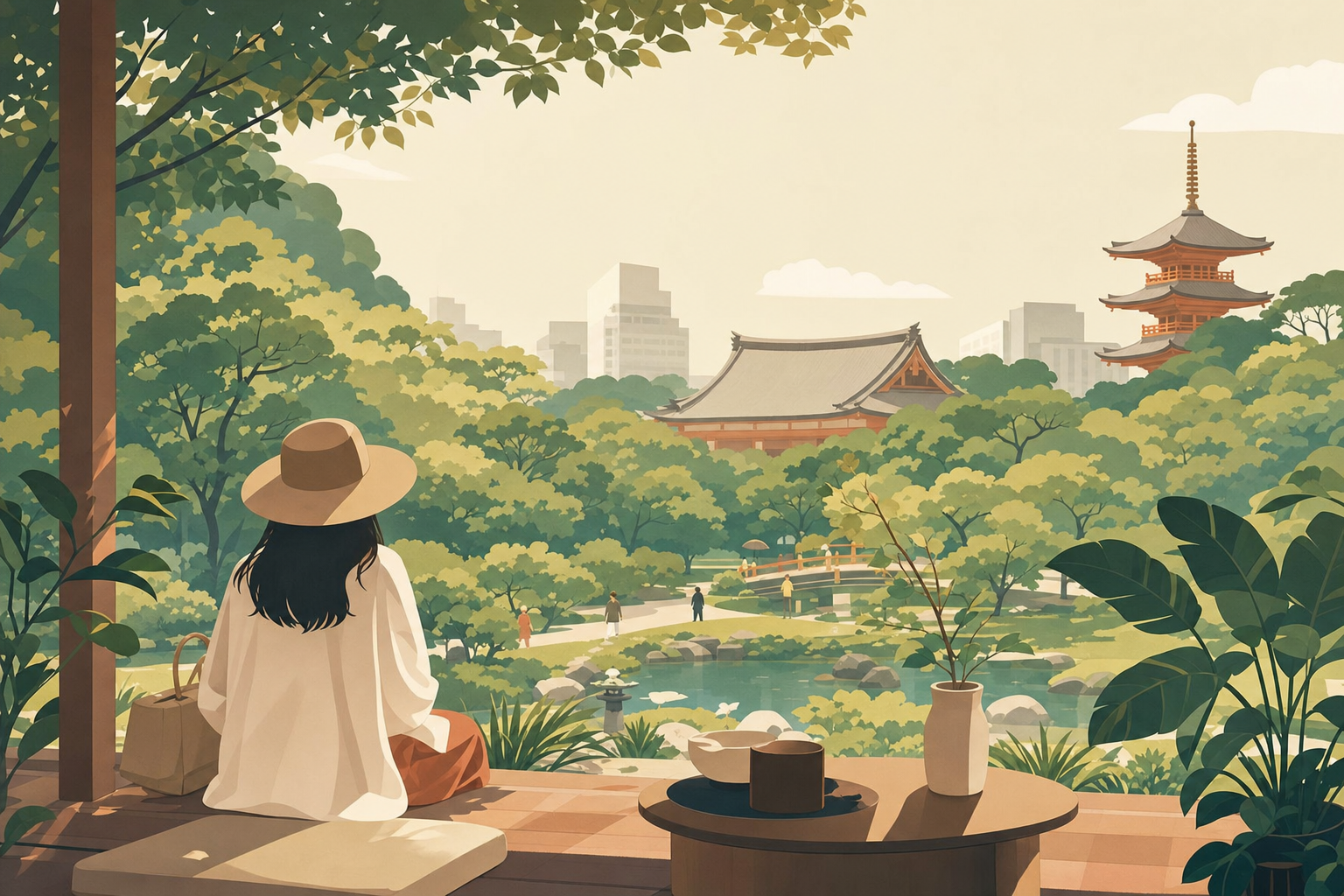
For most first-time families and groups, the Tennoji–Teradacho–Tsuruhashi side is the best summer base: fast rail access, useful indoor breaks and evening food without making Dotonbori your front door. Dotonbori is the default recommendation, but in humid weather I find the Tennoji side easier: start early at the park, cool down in Abeno Harukas or a department store, then decide later whether you still want Namba crowds.
Choose the area by your heat tolerance, not just the postcard
Tennoji has JR Tennoji Station, the Midosuji Line and Kintetsu Osaka-Abenobashi close together. Namba is about 6 minutes away on the Midosuji Line; Umeda is roughly 15 minutes. Tennoji Park, Tennoji Zoo and Abeno Harukas form a practical cluster. You can hear cicadas in the park, then find cold drinks and seating indoors within minutes. Zoo admission has been around ¥500 for adults, but check current hours and pricing.
Teradacho is one JR Osaka Loop Line stop from Tennoji, roughly 2 minutes by train. It is quieter at night than major sightseeing districts, useful when a toddler has fallen asleep in a stroller or grandparents are ready to head home. Tsuruhashi, about two Loop Line stops from Teradacho, has Korean groceries, barbecue restaurants and Kintetsu connections. Its narrow lanes can feel warm and busy at meal times, so shop early or book dinner.
Tennoji / Abeno
JR, Midosuji and Kintetsu access; good for parks, indoor shopping and multi-generation days. Tennoji Station is the practical hub.
Teradacho
One JR Osaka Loop Line stop from Tennoji; suits travellers who want a calmer evening and short train rides.
Tsuruhashi
JR and Kintetsu links; good for yakiniku and Korean food. Expect grilling aromas and close, lively lanes.
Namba / Shinsaibashi
Good for late-night dining and first-timers who want to walk to Dotonbori; busier and noisier in summer evenings.
Umeda
Best for department stores, underground routes and rainy-day shopping; useful for business travellers and northern Osaka plans.
What are the most practical things to do in Osaka in summer?
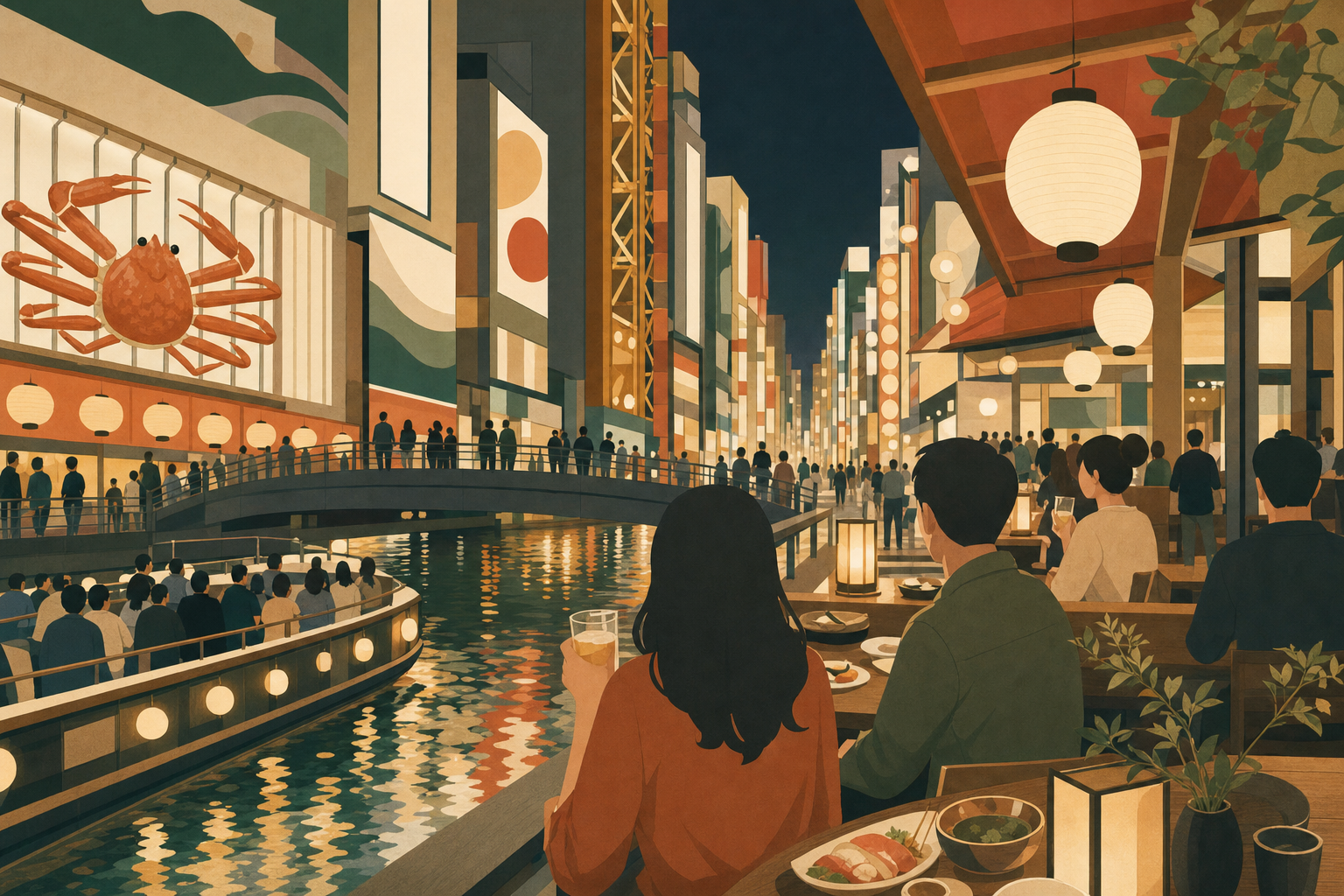
The most practical summer plans combine early outdoor neighbourhoods, midday indoor attractions and a late dinner. Osaka has festivals, river cruises and night views, but timing matters most. Dotonbori at 1pm is very different from Dotonbori at 8pm, when neon reflects on the canal and you are moving with the evening crowd rather than baking beside it.
A heat-smart day from Tennoji to Namba
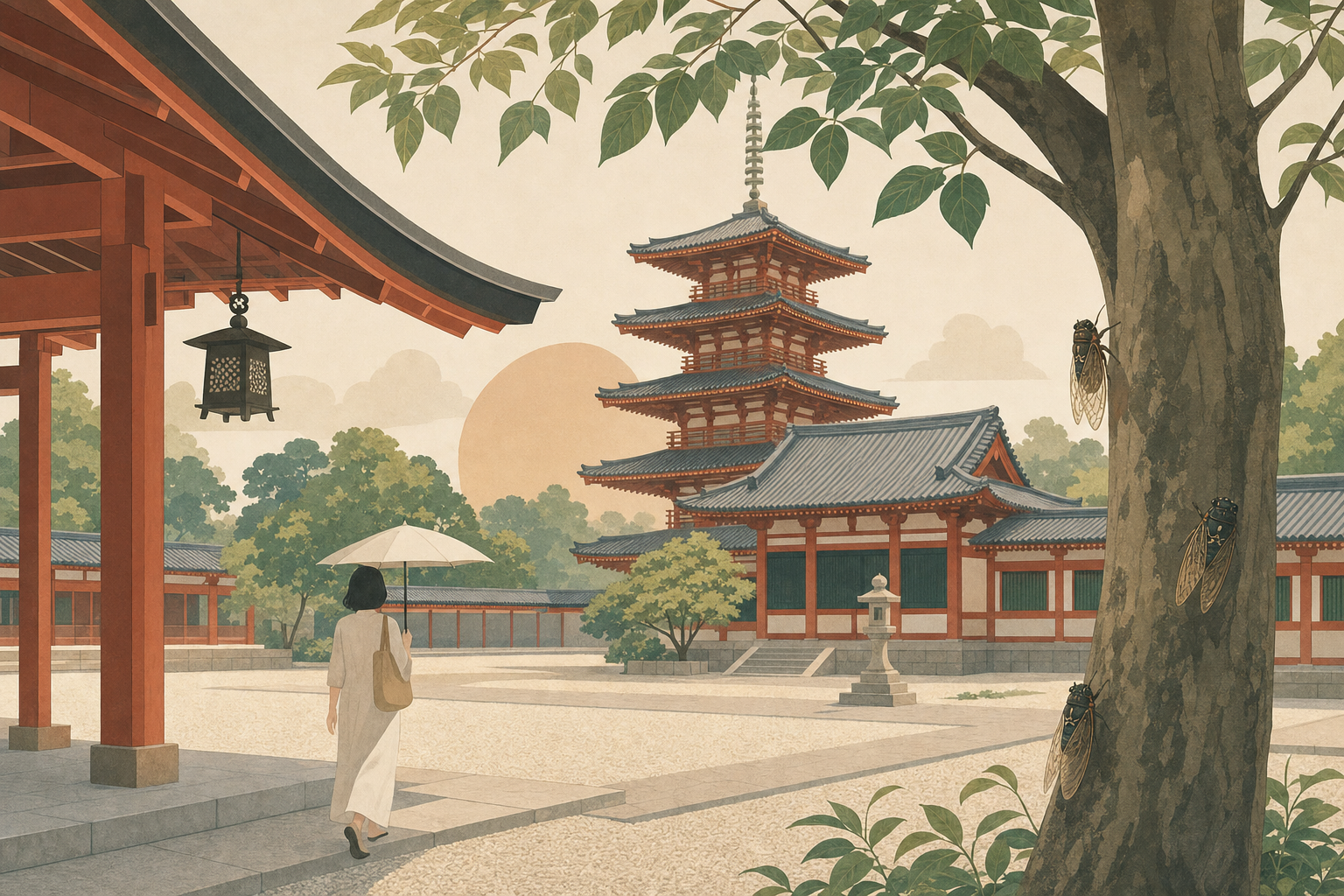
Start around 9am at Tennoji Park or the exterior of Shitennoji Temple, a short walk from Tennoji Station. Shitennoji is calmer than the central food streets, with gravel, temple roofs and cicadas rather than amplified shop music. Entry to some precincts has a modest fee, so confirm the day’s details on the official site.
By late morning, move indoors around Abeno Harukas or nearby department-store floors for lunch. Casual set meals and food-hall options are often roughly ¥1,000–¥2,000 per person; restaurant meals and drinks vary. In late afternoon, take the Midosuji Line to Namba, walk through Shinsaibashi-suji, then reach Dotonbori after the sun eases. For Osaka-style okonomiyaki or takoyaki, choose one or two stops and sit down where possible. Eating five famous things standing in the humidity is a very Osaka plan, but not always a comfortable one.
09:00
Walk Tennoji Park or visit Shitennoji before the pavement starts radiating heat; keep the route short and shaded.
11:30
Eat and cool down around Abeno Harukas or Tennoji Station, then take a longer indoor break if the forecast is severe.
18:00
Ride the Midosuji Line to Namba for Dotonbori, Hozenji Yokocho and dinner after dark; return before the last rush if your group is tired.
For a rain-heavy day, replace the morning walk with Osaka Aquarium Kaiyukan at Osakako Station on the Chuo Line, or use the Umeda underground shopping network. Kaiyukan uses variable ticket pricing and can cost several thousand yen for adults, so check or book the current rate first. Tenjin Matsuri is normally held in late July, with processions and river activity around Tenmabashi and Osaka Temmangu; it is memorable, but crowded, humid and less suited to a tightly scheduled group.
Where should you stay in Osaka in summer with a group?
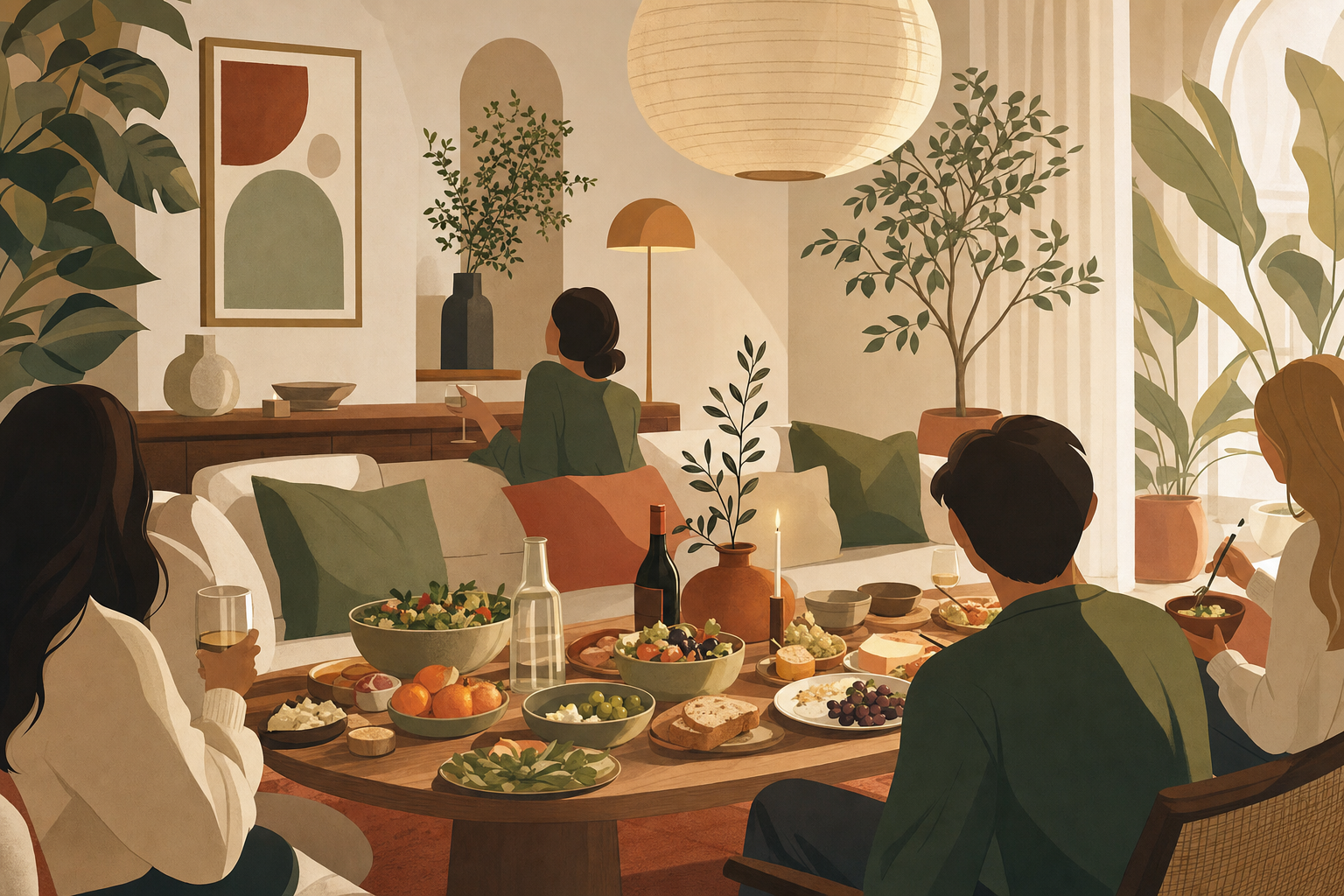
Your summer base should depend on whether the group needs shared recovery space after sightseeing, not only walking distance to landmarks. Two adults planning late dinners may enjoy Namba; a family of six, three generations or friends sharing meals may benefit more from a residential base near a major line.
Five stay choices, and who they fit
- Namba hotel | Suits couples and short stays focused on Dotonbori; walkable evenings, but rooms can be compact and streets stay active late.
- Umeda hotel | Suits shoppers and travellers using Shin-Osaka or northern rail routes; underground access helps in rain, though large stations take time to navigate.
- Tennoji apartment-style stay | Suits families wanting the zoo, park and Midosuji Line nearby; check lift access, bed layout and laundry details before booking.
- Tsuruhashi guesthouse | Suits food-focused groups using JR and Kintetsu; dinner options are strong, while immediate lanes can be busy and aromatic.
- CONTEXTED 大阪 | A whole-house stay in the Teradacho/Tsuruhashi area, for up to 23 guests; a natural fit for families, groups and multi-generation trips that want to gather under one roof after a hot day.
‘Isn’t a hotel easier?’ Sometimes, especially for one or two people who want a staffed front desk and do not need shared time. But larger groups split across hotel rooms turn breakfast, regrouping and late-night chats into logistics. Osaka’s train rides are short, so a place where everyone can cool down and meet can matter more than sleeping beside the busiest signboard.
For a whole-house option, confirm the current sleeping layout, check-in details, rates and availability before committing; summer weekends and holiday periods can move quickly. You can [Check availability & rates] for CONTEXTED 大阪 through the chillnn reservation site.
FAQ
Quick answers for a summer visit
Q: Is Osaka too hot to visit in summer? A: No, but outdoor sightseeing is most comfortable early and after sunset. Plan indoor stops from late morning through mid-afternoon, drink regularly and allow extra time.
Q: What is the best area in Osaka in summer for families? A: Tennoji–Abeno is often the easiest family base because JR, the Midosuji Line, parks, the zoo and indoor shopping are close together. Teradacho is a quieter base one stop away.
Q: What should I do in Osaka when it rains in summer? A: Use aquarium, museum, department-store and underground-shopping time, then return to food streets in the evening if rain clears. Umeda and Tennoji work especially well because so much connects to stations.
Q: Are Dotonbori and Kuromon Market worth visiting in summer? A: Yes. Visit Kuromon in the morning and Dotonbori after sunset. The signs, grill smoke and crowds are part of the experience, while midday heat makes both less comfortable.
If you are building an Osaka summer itinerary, first choose the rail hub that reduces transfers, then book only one major activity per day. Leave the hottest hours open for a long lunch, rest or unscheduled café stop. For a larger party considering Teradacho/Tsuruhashi, compare current dates and layout before locking in transport plans.
RESERVATION
A whole-house stay in Osaka for your group
Walkable to Tsuruhashi, Tennoji, Shinsekai, Dotonbori and Kuromon Market. Sleeps up to 23 — perfect for families and groups to book the entire house. Check availability and rates on the booking site.
Please confirm current rates, availability and amenities on the booking site.
Related articles