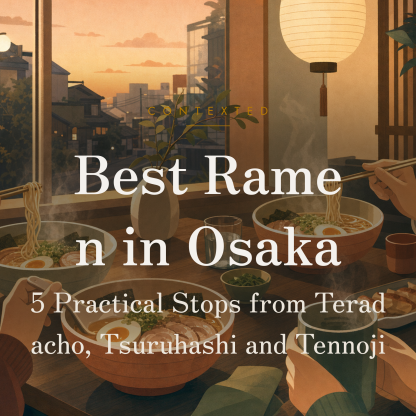
Shinsekai Map: A Practical Walking Route for Tsutenkaku, Jan-Jan Yokocho and Food
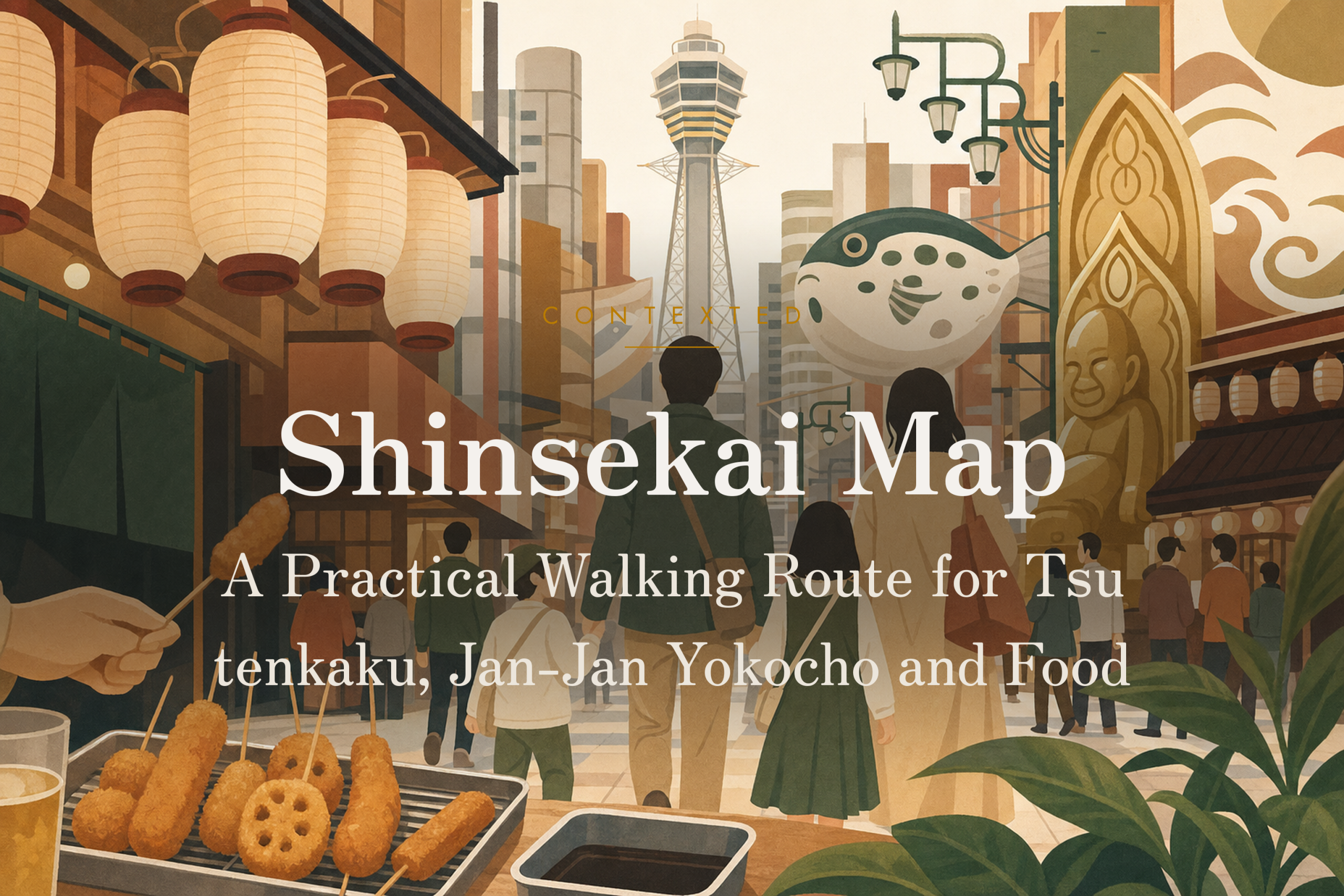
Shinsekai is compact enough to explore on foot: arrive via Ebisucho for the shortest walk to Tsutenkaku, use Dobutsuen-mae for Jan-Jan Yokocho, and allow two to three hours for the tower, alley and a kushikatsu meal. Families should visit in daytime; evenings are livelier and more adult-oriented.
How do you read a Shinsekai map without walking in circles?
Shinsekai is easiest to understand as a small walking loop around Tsutenkaku, not as a district that needs taxis or a packed itinerary. The tower is your landmark; Jan-Jan Yokocho runs toward Dobutsuen-mae and Shin-Imamiya, while Ebisucho sits to the east and gives the quickest approach to the tower.
Start with Tsutenkaku as the centre point
Put Tsutenkaku Tower in the middle of your map first. From there, most of the streets visitors mean when they say “Shinsekai” are within a few minutes on foot. You will see the tower framed between low-rise signs, lanterns and kushikatsu storefronts; it is hard to lose your bearings once you look up.
For the shortest walk to the tower, use Ebisucho Station on the Osaka Metro Sakaisuji Line: it is roughly three minutes on foot. Dobutsuen-mae Station, served by the Midosuji and Sakaisuji lines, is roughly six minutes from Tsutenkaku and roughly three minutes from Jan-Jan Yokocho. Shin-Imamiya Station on the JR Osaka Loop Line is also roughly six minutes away on foot.
The simple west-to-east walking line
A useful mental line runs from Shin-Imamiya / Dobutsuen-mae through Jan-Jan Yokocho, then onward to Tsutenkaku, with Ebisucho beyond it. If your group meets at a station, this prevents the usual split: one person arrives at the tower while another is already choosing skewers in the alley.
The streets are close together, but the atmosphere shifts quickly. Jan-Jan Yokocho feels tighter and noisier, with counters, game signs and the smell of frying oil. Around Tsutenkaku, the streets open up enough for photos and for a family to regroup without blocking a doorway.
A map pin list worth saving
Before leaving your accommodation, save these pins rather than relying on one broad “Shinsekai” search result:
- Tsutenkaku Tower | Observation deck, ticketed entry, and the district’s visual centre.
- Jan-Jan Yokocho | Kushikatsu counters, Smart Ball New Star, and older local storefronts.
- Dobutsuen-mae Station | Best rail marker for the western side and the alley.
- Ebisucho Station | Best rail marker when Tsutenkaku is your first stop.
That is enough map preparation for most visitors. Osaka rewards leaving a little room for the side streets, frankly.
Which station should you use for Shinsekai?
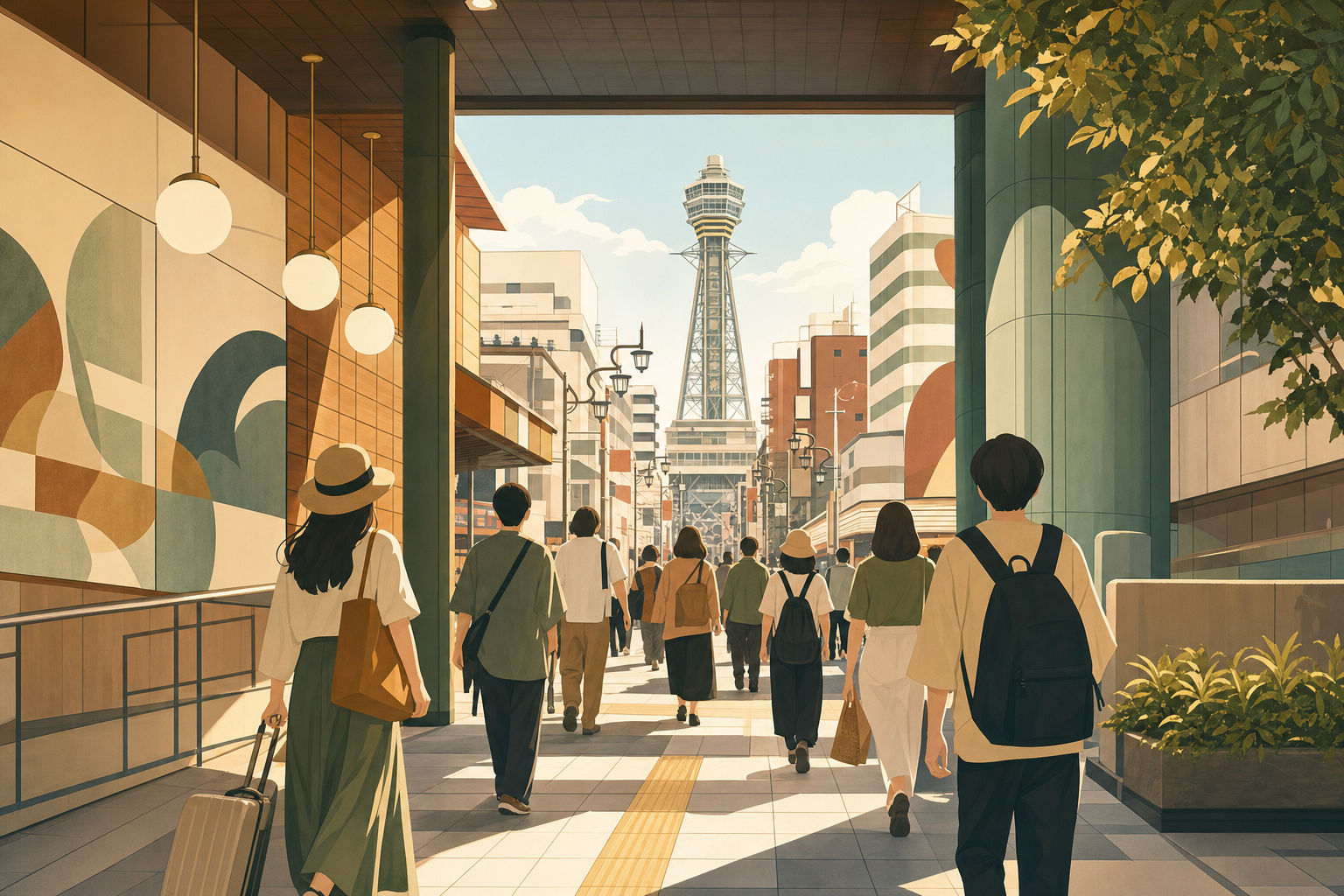
Choose Ebisucho for Tsutenkaku, Dobutsuen-mae for Jan-Jan Yokocho, and Shin-Imamiya when you are arriving on the JR Osaka Loop Line. The distances are short, so this is about saving tired legs and keeping your day in a sensible order.
From Tsuruhashi, Teradacho and Tennoji
From Tsuruhashi, take the JR Osaka Loop Line to Shin-Imamiya; the ride is roughly 10 minutes, then allow around six minutes on foot to Tsutenkaku. It is an easy move after the smoke-and-grill smell around Tsuruhashi Station, and it avoids changing lines.
From Tennoji / Abeno, Shinsekai is roughly a 15-minute walk, or one Midosuji Line stop from Tennoji to Dobutsuen-mae. For a group with a stroller, younger children or a grandparent, the one-stop train is often the calmer choice, especially after a long day at Abeno Harukas or Tennoji Park.
From Namba, Dotonbori and Kuromon Market
From the Namba / Dotonbori side, take the Osaka Metro Midosuji Line to Dobutsuen-mae, roughly five minutes, then walk about three minutes to Jan-Jan Yokocho. It makes sense as an afternoon shift: Dotonbori for the canal and signs, then Shinsekai for a more rough-edged, older Osaka streetscape.
From Kuromon Market, the Sakaisuji Line to Ebisucho is roughly five minutes, followed by about a three-minute walk to Tsutenkaku. Kuromon moves most easily in the morning, before its narrow aisles thicken with visitors, so this pairing works well: market breakfast or an early snack, then Shinsekai after lunch.
Pick one entry, one exit
Do not backtrack just because the train map looks complicated. A practical route is to enter through Ebisucho, see Tsutenkaku, walk through Jan-Jan Yokocho, then leave from Dobutsuen-mae or Shin-Imamiya. Reverse it if you are coming from Namba.
This is also a useful point for multi-generation groups: agree on an exit station before entering the alley. Mobile maps work, but the old signs, bright storefronts and passing crowds can make a casual “meet you outside” less clear than it sounds.
What should you see and eat on a Shinsekai walking route?
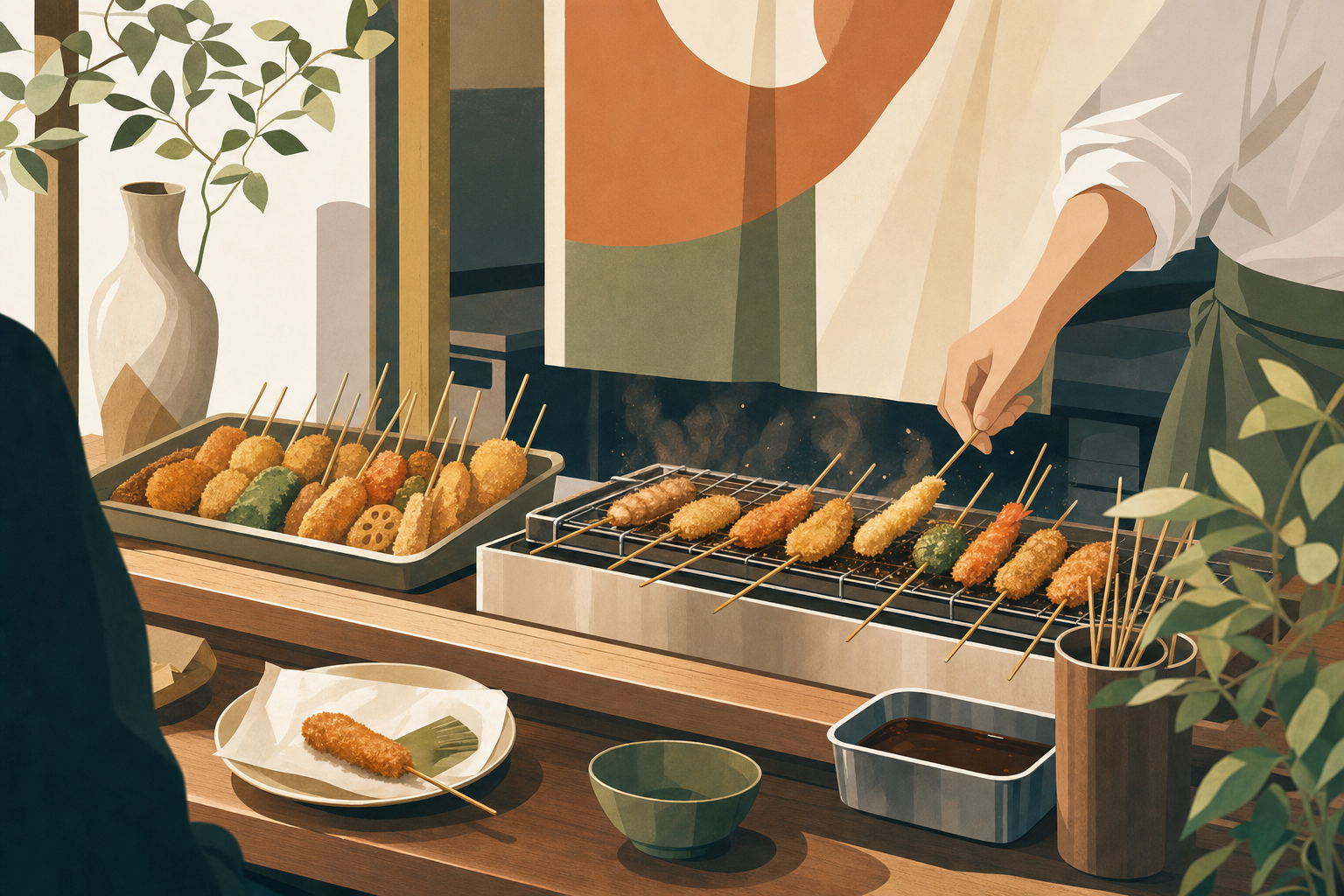
The worthwhile Shinsekai route is Tsutenkaku first, Jan-Jan Yokocho second, then a relaxed kushikatsu or doteyaki stop rather than trying to eat at every signboard. Two to three hours is a realistic pace; add time if you plan to queue for a particular restaurant or go up the tower.
Tsutenkaku: one ticketed stop, not an all-day activity
Tsutenkaku is generally open from 10:00 to 20:00, with final entry around 19:30; hours can change with seasons or events, so check current official information before you go. Standard admission is listed at ¥800 for adults (high-school age and above) and ¥400 for elementary and junior-high-school students.
The main observation deck is on the fifth floor. There is also TIP THE TSUTENKAKU, a transparent deck experience, and a rooftop garden on the third floor. Those additions may have separate conditions or fees, so check current details when booking your visit. From above, the dense roofs and rail lines make more sense than they do at street level.
Jan-Jan Yokocho: go for the texture, then choose one meal
Jan-Jan Yokocho is the narrow, retro-feeling arcade-like alley near Dobutsuen-mae. Many businesses run from late morning into the evening or later, but each shop keeps its own schedule. The busy stretch is commonly late afternoon into night, when counter seats fill and the kushikatsu fryers are working hard under the signs.
In daylight, you can notice the small details: a Smart Ball New Star sign, older board-game and go-club storefronts, bicycles parked against shutters, and the clatter of plates from compact counters. At night, it is more crowded and more adult-oriented. For families, I would choose lunch or an early afternoon wander rather than treating it as a late-night destination.
Kushikatsu and doteyaki: what to order, and the rule to know
Kushikatsu is deep-fried skewers—meat, vegetables and other ingredients—served with dipping sauce. Doteyaki is beef sinew slowly cooked in miso, usually a small, rich side dish that works well before the fried food arrives. A straightforward kushikatsu meal with drinks will often land around ¥1,000–¥2,500 per person, depending on the number of skewers and drinks; menus and prices vary, so check at the door.
The well-known rule is no double-dipping in the communal sauce. If you need more sauce, use the cabbage provided or follow the shop’s instructions. It is a small local custom, but it saves an awkward moment at the counter.
01 / Arrive before lunch
Start at Ebisucho around 10:00–11:00, when Tsutenkaku and the surrounding streets are easier to photograph.
02 / See the tower first
Allow roughly 45–75 minutes for entry, the observation deck and a pause outside; queues can extend the visit.
03 / Walk west and eat early
Continue through Jan-Jan Yokocho for an early lunch, then exit via Dobutsuen-mae for Namba or Shin-Imamiya for the JR Loop Line.
Is Shinsekai suitable for families and first-time visitors?
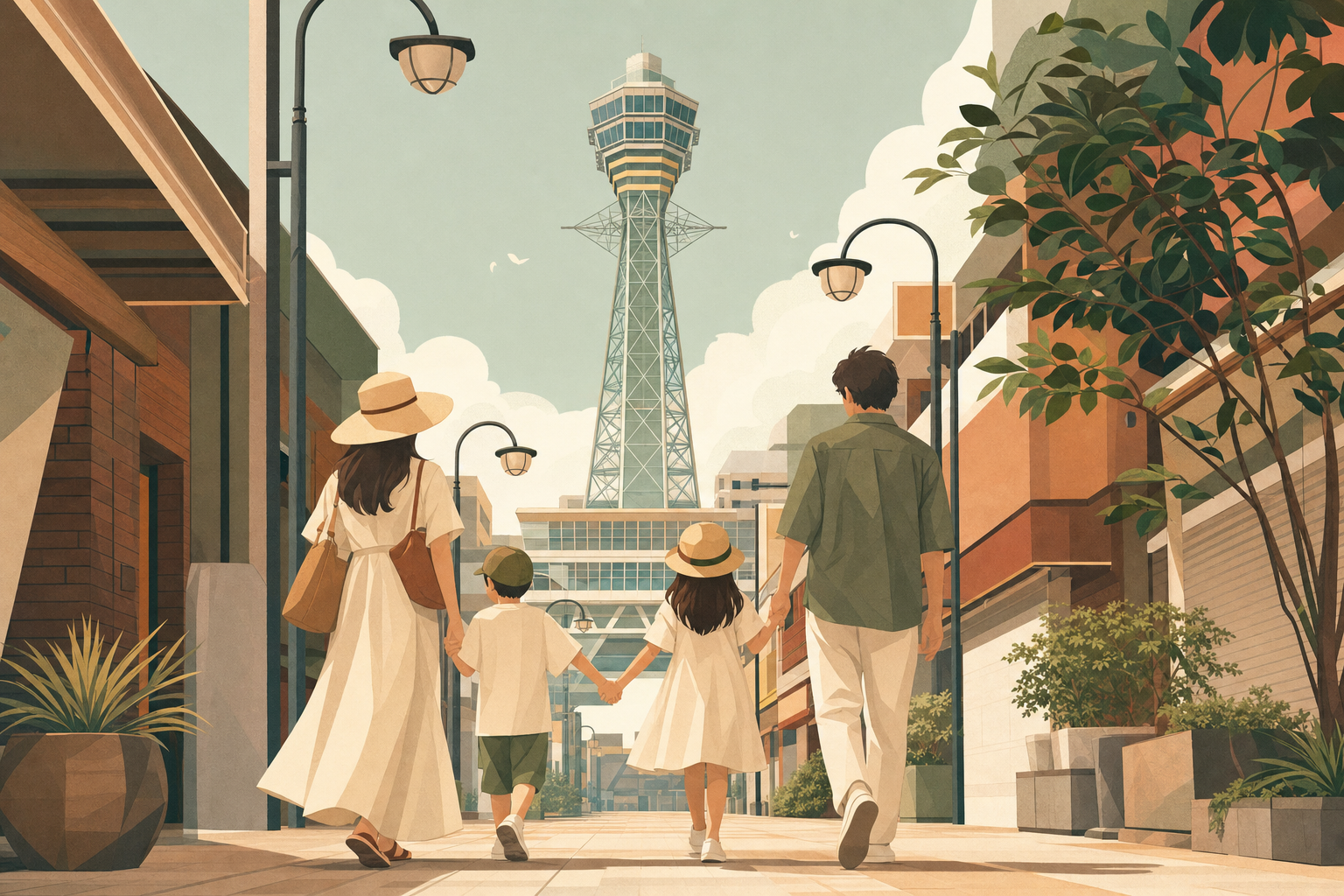
Yes—Shinsekai works well for families in the daytime if you use a short, clear route and do not expect the evening atmosphere to feel like a quiet shopping street. The tower gives children a defined goal, the walk is compact, and Tennoji is close enough to combine with a park, zoo or Abeno Harukas day.
Daytime is the better family map
Who are you travelling with? That question changes the map more than people expect. With children or older relatives, aim to arrive between late morning and mid-afternoon, take the tower at an unhurried pace, and eat before the evening rush. The lively noise is part of Shinsekai, but narrow pavements and crowded counters become more work after dark.
Keep the route to one main lane and one station exit. If someone needs a rest, it is usually more comfortable to head back toward Tennoji or your accommodation than to keep hopping between queues in Jan-Jan Yokocho.
“Isn’t Namba easier?” — sometimes, but not for every group
A hotel in Namba is handy if your plan is nightlife and you want to walk home from Dotonbori. But guides push Namba so often that families and larger groups can miss the simpler Tennoji-side option. From Tennoji, Shinsekai is about 15 minutes on foot or one subway stop away, while you also have the park, zoo and Harukas in the same broad area.
My local view is straightforward: Osaka’s travel times are short enough that a group does not need to sleep in the busiest tourist zone. A base where everybody can sit together after dinner often matters more than shaving off one train stop.
A few street-level cautions
The district is a real neighbourhood as well as a visitor area. Keep voices down near residential streets, do not stop a whole group in the middle of an alley for photos, and confirm each restaurant’s queue and seating rules before committing.
Evening crowds
Jan-Jan Yokocho tends to be busiest from late afternoon into night; families may prefer lunch or an early visit.
Restaurant seating
Small counters may not seat a large party together, so ask before lining up.
Tower hours
Tsutenkaku’s usual 10:00–20:00 schedule and last entry can change; check current official details.
Where should a group stay when Shinsekai is on the map?
For Shinsekai-focused groups, choose a base by your evening plan: Namba for late Minami nights, Tennoji for family sightseeing, or the Teradacho/Tsuruhashi side when sharing one house matters more than being in a tourist core. These are practical starting points, not a ranking.
Six Osaka bases for a Shinsekai day
Ebisucho
Sakaisuji Line, roughly a three-minute walk to Tsutenkaku. Suits short stays built around Shinsekai and Nipponbashi.
Dobutsuen-mae / Shin-Imamiya
Midosuji, Sakaisuji and JR Loop Line access; roughly three minutes to Jan-Jan Yokocho. Suits travelers changing between Namba, Shinsekai and the JR network.
Tennoji / Abeno
One Midosuji stop or roughly a 15-minute walk to Shinsekai. Suits families combining the tower with Tennoji Park, the zoo and Harukas.
Namba
Roughly five minutes by Midosuji Line to Dobutsuen-mae. Suits couples or friends prioritising Dotonbori and evening dining.
Tsuruhashi
Roughly 10 minutes by JR Osaka Loop Line to Shin-Imamiya, plus a walk. Suits visitors planning Korean food, yakiniku and rail access around Osaka.
CONTEXTED 大阪 in the Teradacho / Tsuruhashi area
A whole-house stay for up to 23 people, suited to families, multi-generation trips and groups wanting one shared base while reaching Shinsekai by public transport.
Compare the room layout, not just the station pin
For two people, a standard hotel near the station can be the simplest fit. For eight, 12 or several generations, calculate the total across multiple hotel rooms, the number of keys, and where everyone will meet for breakfast or after dinner. A whole-house option is not automatically right for every trip, but it can reduce the logistical friction of splitting a group across floors.
At CONTEXTED 大阪, the relevant point is the group format: one house, in the Teradacho/Tsuruhashi area, with capacity of up to 23 guests. Rates, dates and current accommodation details vary, so check them rather than planning around a headline price: [Check availability & rates].
Build a route around your base
From a Tsuruhashi-side base, take the JR Loop Line to Shin-Imamiya for an efficient arrival. From Teradacho or Tennoji-side accommodation, make Shinsekai one part of a broader south-Osaka day: Tennoji in the morning, Shinsekai for lunch, then return before everyone gets tired. It sounds ordinary, but leaving one unscheduled hour is how a group actually gets to browse, sit down and enjoy the place.
FAQ
Q: What is the closest station to Tsutenkaku? A: Ebisucho Station on the Osaka Metro Sakaisuji Line is roughly a three-minute walk from Tsutenkaku; Dobutsuen-mae and Shin-Imamiya are each roughly six minutes on foot.
Q: How long does it take to walk around Shinsekai? A: Allow roughly two to three hours for Tsutenkaku, Jan-Jan Yokocho and one meal. Add time for tower or restaurant queues.
Q: Is Shinsekai safe and suitable for children? A: Daytime is generally the more comfortable time for families, with a clear tower-and-alley route. At night the area is busier and has a stronger adult-oriented atmosphere, so keep the route short and stay aware of your group.
Q: What food should I try in Shinsekai? A: Try kushikatsu and doteyaki. For kushikatsu, follow the restaurant’s sauce rules; communal sauce is traditionally not double-dipped.
Q: Can I get from Namba to Shinsekai easily? A: Yes. Take the Osaka Metro Midosuji Line from Namba to Dobutsuen-mae in roughly five minutes, then walk about three minutes to Jan-Jan Yokocho.
Q: Is a whole-house stay useful for a large Osaka group? A: It can be useful when your group wants to stay together rather than divide across hotel rooms; compare the total cost, location, sleeping arrangement and current house details before booking.
A Shinsekai map is really a decision about pace: pick one station, keep Tsutenkaku in view, and leave time for lunch rather than chasing every sign. If your group needs a shared Osaka base for this route and the wider city, check the current layout, dates and rates before committing. That little bit of planning makes the day easier on everyone.
RESERVATION
A whole-house stay in Osaka for your group
Walkable to Tsuruhashi, Tennoji, Shinsekai, Dotonbori and Kuromon Market. Sleeps up to 23 — perfect for families and groups to book the entire house. Check availability and rates on the booking site.
Please confirm current rates, availability and amenities on the booking site.
Sources and current checks
Tsutenkaku access, usual opening hours, admission figures and attractions: Japan National Tourism Organization — Tsutenkaku. Jan-Jan Yokocho access, general character and area information: Osaka Convention & Tourism Bureau — Jan-Jan Yokocho. Information was checked against the supplied research memo dated 15 July 2026; restaurant schedules, menus, queues and tower operations can change, so confirm current information on the day.
Related articles