Osaka Street Food for Solo Travelers: A Practical Route from Kuromon to Shinsekai
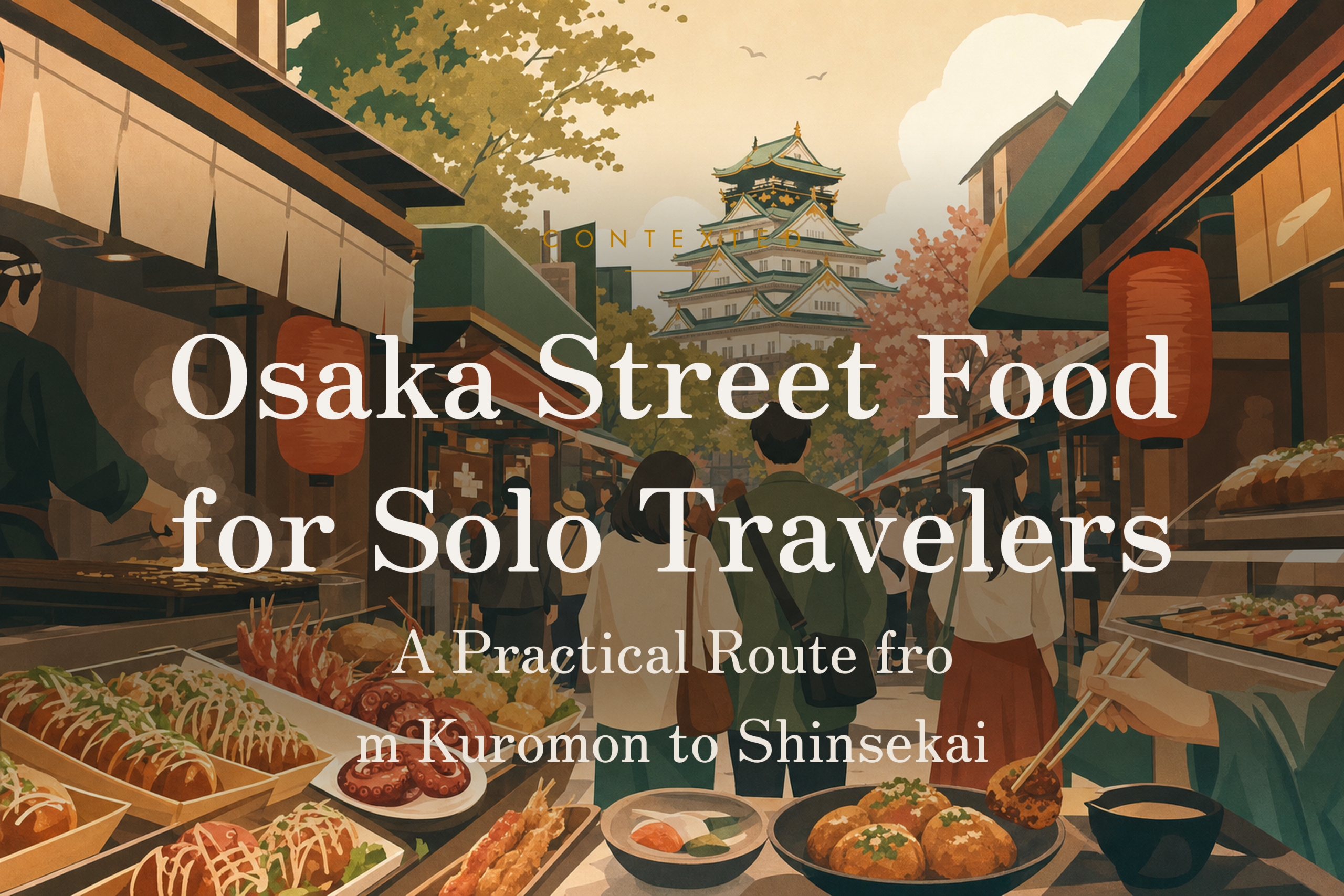
Osaka street food is easy to enjoy alone if you treat it as a series of short stops rather than one long food crawl: begin at Kuromon Market in the morning, take a seated kushikatsu break in Shinsekai, then choose Tsuruhashi or Dotonbori for the evening. Plan roughly ¥2,500–¥5,000 for several small dishes and drinks.
Where should a solo traveler start with Osaka street food?
For a solo traveler, Kuromon Market, Shinsekai, and Tsuruhashi are usually easier to eat through than trying to begin in crowded Dotonbori.
Each has food you can buy in small portions, nearby rail access, and places to pause without needing a big group or a long reservation.
Start at Kuromon Market before the lunchtime squeeze
Kuromon Market is a sensible first stop because you can see what you are buying, point if language is a concern, and build breakfast or an early lunch from a few small items.
It is about a 5-minute walk from Nippombashi Station, served by the Osaka Metro Sennichimae and Sakaisuji lines plus Kintetsu.
Many stalls trade roughly from 9am into the late afternoon, though individual hours and closed days vary.
The covered arcade smells of grilled scallops, soy glaze, and sweet fruit cups by mid-morning.
Expect takoyaki or grilled skewers around ¥400–¥900, while seafood and wagyu items can run from around ¥1,000 to several thousand yen depending on size and season.
One seafood skewer, one hot snack, and a drink is enough to start; you do not need to buy the dramatic, expensive item at every counter.
Eat near the stall or in a designated area rather than walking through the narrow market with food in hand. Kuromon moves most comfortably before 11am.
After that, tour groups and lunchtime shoppers make it slower, especially on weekends.
Use Shinsekai when you want to sit down for your next bite
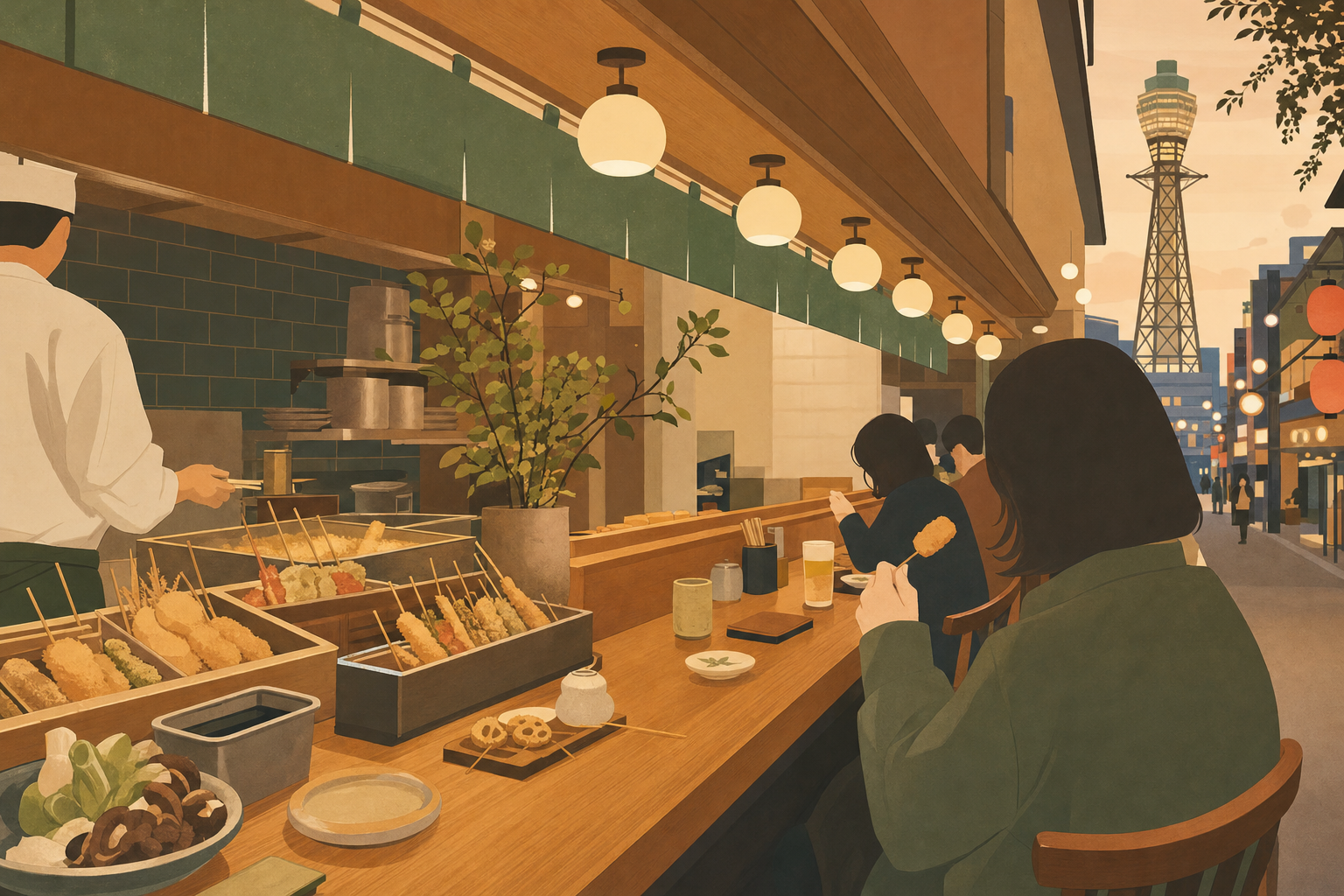
Shinsekai is the better reset after a market morning.
From Nippombashi, take the Osaka Metro Sakaisuji Line to Ebisucho in about 5 minutes, then walk toward Tsutenkaku; alternatively, Dobutsuen-mae Station on the Midosuji or Sakaisuji line is useful from other parts of town.
Under the tower, Jan-Jan Yokocho’s old signboards, clattering stools, and kushikatsu counters feel deliberately scruffy in a way that suits eating alone.
Kushikatsu is not quite grab-and-go street food, and that is its advantage. A solo diner can take one counter seat, order five to eight skewers, and have a proper break.
A light meal is often roughly ¥1,000–¥2,000 before drinks, depending on what you order. Remember the local rule: do not double-dip a skewer in the shared sauce container.
Some shops provide individual sauce or instructions now, so follow the counter’s system.
Is Dotonbori worth visiting alone for street food?
Dotonbori is worth one focused evening stop, but I would not make it your first food destination if you are alone and hungry.
Guides push Dotonbori hard; honestly, Kuromon in the morning and Shinsekai at a counter are easier to enjoy at your own pace.
Dotonbori works better once you have already eaten something and can choose one snack without queue anxiety.
Go for the canal atmosphere, then step one street away to eat
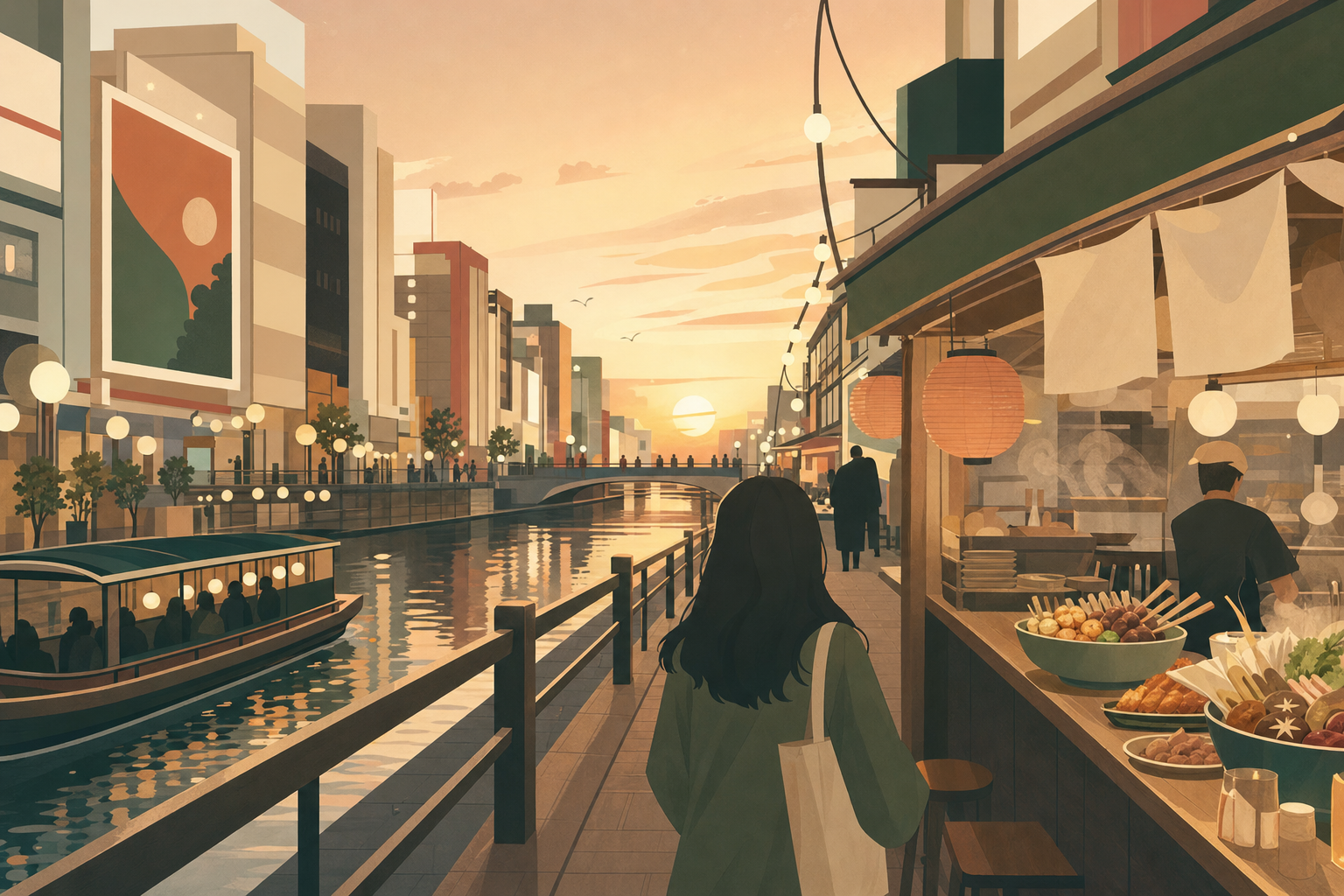
Dotonbori is a 5–10-minute walk from Namba Station or Nippombashi Station.
Around sunset, the canal lights turn on, the Glico sign gathers camera crowds, and the air carries butter, frying oil, and sweet sauce from takoyaki stalls.
A six- to eight-piece takoyaki portion is commonly around ¥600–¥900; small okonomiyaki-style snacks, grilled seafood, and desserts vary widely.
Aim for about 4:30–5:30pm if you want evening atmosphere before the heaviest dinner queues. From 7pm onward, the main canal-side strip can be slow-moving.
Buy your one chosen item, then move to a less congested side street or find a standing space where the shop allows it. Osaka does not really reward eating while weaving through crowds.
For a different evening mood, take the Osaka Metro Sennichimae Line from Nippombashi to Tsuruhashi in about 7 minutes. The moment you exit around Tsuruhashi Station, the smell of yakiniku smoke is the greeting.
Korean-style snacks such as kimbap, hotteok, or tteokbokki are often sold in manageable portions, roughly ¥300–¥800 depending on the stall. If you want a full barbecue meal, go early or expect a wait around dinner time.
How can you plan a solo Osaka food crawl without wasting time or money?
The useful rule is to combine one market, one seated stop, and one evening neighborhood on the same rail corridor. Who are you traveling with—or are you truly eating only when you feel like it?
Solo travel gives you the freedom to change course, but it also means a little route planning saves you from buying too much too early.
Follow a three-stop route and leave room for dinner
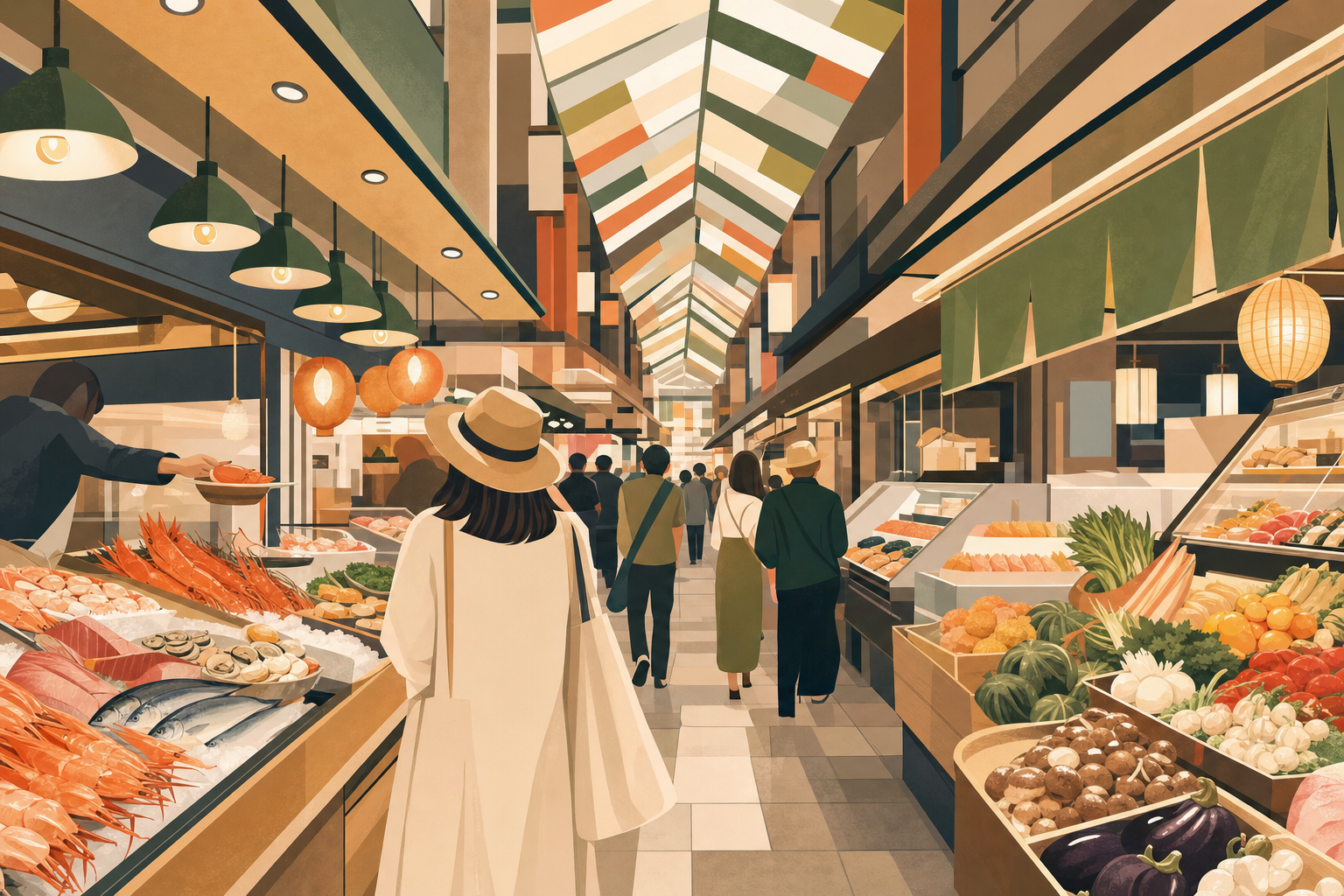
Morning: Kuromon Market
Arrive around 9:30–10:30am via Nippombashi Station; choose two small items and keep your spending for later.
Afternoon: Shinsekai and Tennoji
Ride to Ebisucho, see Tsutenkaku, then sit for kushikatsu; walk or take one stop south to Tennoji for the park or Abeno Harukas area.
Evening: Tsuruhashi or Dotonbori
Choose Tsuruhashi for Korean snacks and yakiniku smoke, or Dotonbori for canal lights and one classic takoyaki stop.
From Shinsekai to Tennoji, it is around a 15-minute walk, passing the zoo and park edge. It is an easy stretch when your hands are free and you have not overdone the snacks.
From Tennoji, the JR Osaka Loop Line reaches Teradacho in about 2 minutes and Tsuruhashi in roughly 6 minutes, which makes this side of Osaka practical for a late return.
A few small habits make the day smoother:
- Carry cash or a contactless card; smaller food stalls do not all use the same payment methods.
- Keep a small bag for tissues and wrappers, then use shop bins where provided rather than leaving rubbish on the street.
- Order one item at a time; hot takoyaki and skewers fill you up faster than they look.
- Check the queue before joining it: a 20-minute line for a snack is rarely the only option nearby.
Where should solo food travelers stay in Osaka?
For one person, a station-side hotel or hostel is usually the simplest stay; a whole house becomes more relevant when your solo trip turns into a family or friend gathering.
” Often, yes—particularly for one or two nights and a late Namba finish. But if several people are arriving at different times, having one shared base changes the rhythm of the trip.
Five stay bases to match your eating route
Namba hotel near Namba Station
Good for late Dotonbori walks and direct access to the Midosuji Line. Single rooms commonly vary from roughly ¥9,000–¥22,000 per night by date; suits a short solo city break.
Nippombashi hostel or guesthouse
Near Kuromon Market and the Sennichimae Line. Dorm beds may be roughly ¥3,000–¥7,000, while private rooms vary; useful when market mornings matter more than room space.
Tennoji hotel near Tennoji Station
A practical base for Shinsekai, Abeno Harukas, and JR connections. It suits solo travelers who want a quieter return than central Namba after dinner.
Tsuruhashi-area stay near Tsuruhashi Station
Useful for Korean food, Kintetsu trains, and the JR Osaka Loop Line. Choose this if yakiniku and local shopping streets are part of the plan, not merely a one-night checklist.
CONTEXTED 大阪 in the Teradacho/Tsuruhashi area
A whole-house stay for up to 23 people, so it is more natural for families, multi-generation trips, or a group joining your food route than for one person alone. Teradacho and Tsuruhashi give access to the Loop Line and onward city connections.
If your solo plans are becoming a group trip, you can [Check availability & rates] for current dates, total pricing, and accommodation details.
FAQ
These are the practical questions solo diners ask most often once they are standing in front of a busy Osaka stall.
Quick answers for eating alone
** A: Yes. Markets, standing counters, and kushikatsu counters regularly serve solo customers. Order modestly, eat in the shop’s designated space, and move on when you are finished.
** A: Roughly ¥2,500–¥5,000 covers several snacks, a seated kushikatsu stop, and a drink. Premium seafood, wagyu, alcohol, and late-night yakiniku can raise that quickly.
** A: Take the JR Osaka Loop Line to Tennoji in about 15–20 minutes, then walk or take the subway toward Shinsekai. For Kuromon, use the Midosuji Line toward Namba and connect to Nippombashi as needed.
** A: Visit Kuromon first if you can go in the morning; it is more practical for browsing and smaller portions.
Save Dotonbori for late afternoon or evening, when you want the canal atmosphere rather than a relaxed market shop.
Food plans go better when you leave a little empty space in them.
Pick one neighborhood that matches your appetite, use the trains instead of forcing a long walk between every famous sign, and let the second snack be a decision you make on the spot.
If your table is growing from one traveler to a family or group, a shared base around Teradacho and Tsuruhashi can keep the route flexible.
RESERVATION
A whole-house stay in Osaka for your group
Walkable to Tsuruhashi, Tennoji, Shinsekai, Dotonbori and Kuromon Market. Sleeps up to 23 — perfect for families and groups to book the entire house. Check availability and rates on the booking site.
Please confirm current rates, availability and amenities on the booking site.
Related articles