Osaka Traditional Tea Ceremonies: How to Choose a Genuine First Experience
For a first Osaka traditional tea ceremony, book a small guided session near Namba for convenience, or combine a ceremony with Sakai’s Sen no Rikyū history for more context. Expect roughly 60–90 minutes and about ¥3,000–¥7,000 per person; check language, seating, and inclusions before paying.
What does a traditional tea ceremony in Osaka actually involve?
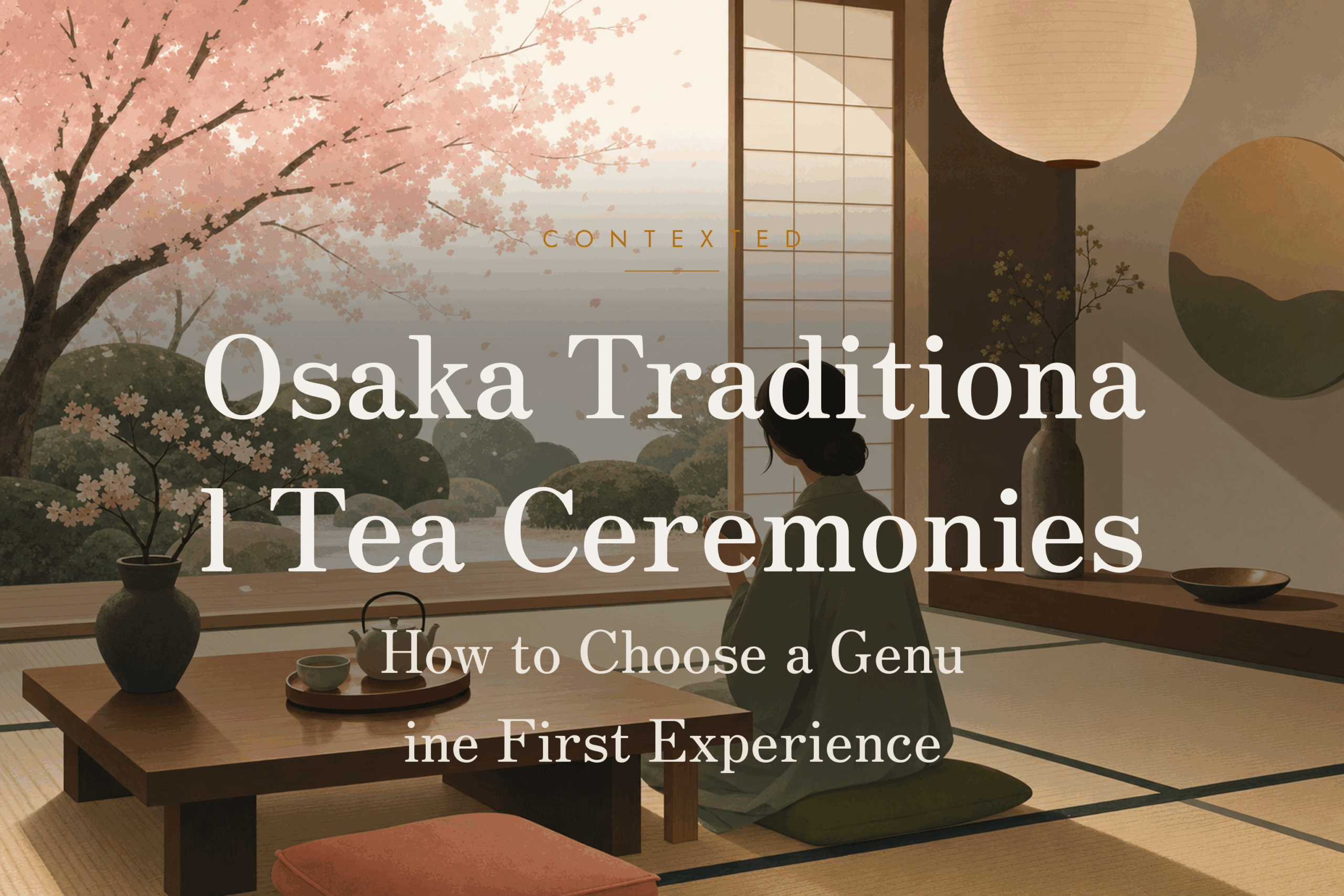
A first experience is less about expensive tea than noticing the sequence: enter quietly, look at the hanging scroll and flowers, receive a sweet, then drink whisked matcha from a bowl turned slightly in your hands.
The stillness can feel striking after Namba’s ticket gates and giant signs.
Tea ceremony is a practice, not a performance
In Japanese, the broad term is *sadō* or *chadō*—the way of tea. Visitor sessions adapt it for newcomers: an instructor explains utensils, prepares matcha, and may let you whisk a bowl yourself.
This differs from a full formal gathering hosted by a tea school, which can last several hours and follows more detailed seasonal rules.
For a first visit, a 60-minute English-language session makes sense if you have children or grandparents with you, or a busy Osaka schedule.
Check whether it includes a demonstration, a sweet (*wagashi*), matcha, and hands-on preparation.
Many visitor-friendly sessions are in or near Namba, Shinsaibashi, and central Osaka. You may step from escalators, traffic, and takoyaki smells into a compact tatami room. That contrast is part of the experience.
What should you wear, and can children join?
Wear clean socks and comfortable clothing for floor seating. Shoes come off before entering a tatami room, and bare feet are generally not appropriate.
You do not need a kimono or memorised etiquette; a good host will demonstrate. Avoid strong perfume, arrive early, and silence your phone.
For families, ask about chairs before booking. Formal kneeling, called *seiza*, can be uncomfortable for knees, older guests, and young children.
Introductory sessions may arrange low chairs or permit relaxed seating, but do not assume it. Ask about the sweet if anyone has food allergies; common ingredients include rice flour, beans, and seasonal flavourings.
- Choose a 60–90 minute session for a first visit rather than a half-day class.
- Confirm the teaching language and whether interpretation is included.
- Ask about chair seating before booking if your group includes older travellers.
- Keep the time after lunch light; matcha contains caffeine, even though the serving is small.
Where should you go for Osaka traditional tea ceremonies?
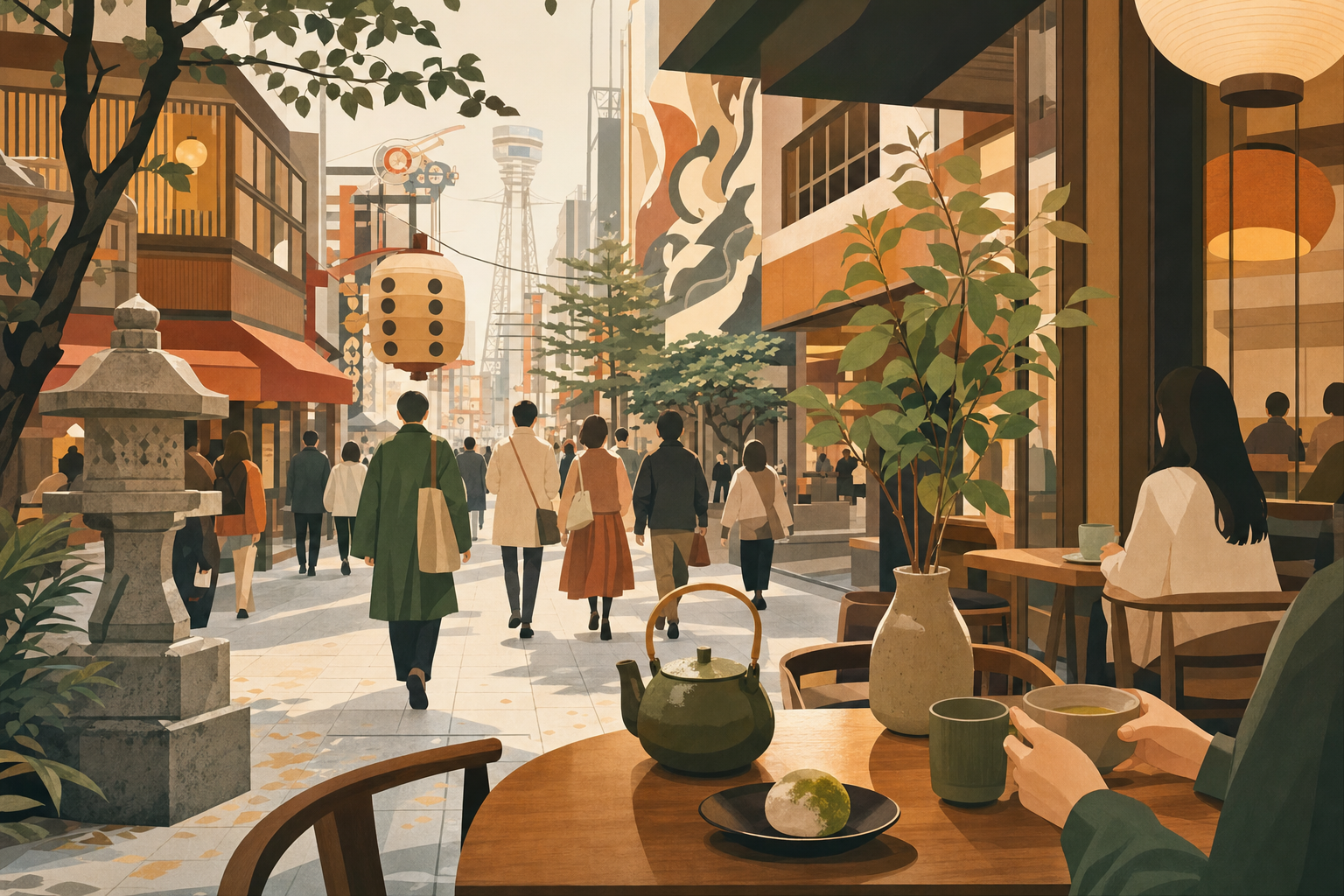
For convenience, choose Namba; for tea history, choose Sakai. Kyoto suits travellers making tea ceremony a full-day focus, but I think Osaka works better when tea fits naturally into food, markets, and family sightseeing.
Namba and Shinsaibashi: easiest for a short guided session
Namba has the broadest concentration of visitor-oriented cultural studios and connects easily with a Minami sightseeing day.
From Namba Station or Osaka-Namba Station, Dotonbori is a short walk; Kuromon Market is around 10–15 minutes on foot, depending on the exit. Morning is calmer at Kuromon, before tour groups and snack queues fill the lanes.
A practical plan is a 9:00 market breakfast, a late-morning tea session, then Hozenji Yokocho or Shinsaibashi.
Sessions around ¥3,000–¥7,000 are a common rough range; kimono rental, private rooms, photography, or longer instruction usually increase the price. Availability and content vary by operator and season.
Who are you travelling with? A couple may enjoy a small shared class; a family of eight will often find a private booking less stressful, even at a higher per-person cost.
Sakai: choose this when you want the story behind the bowl
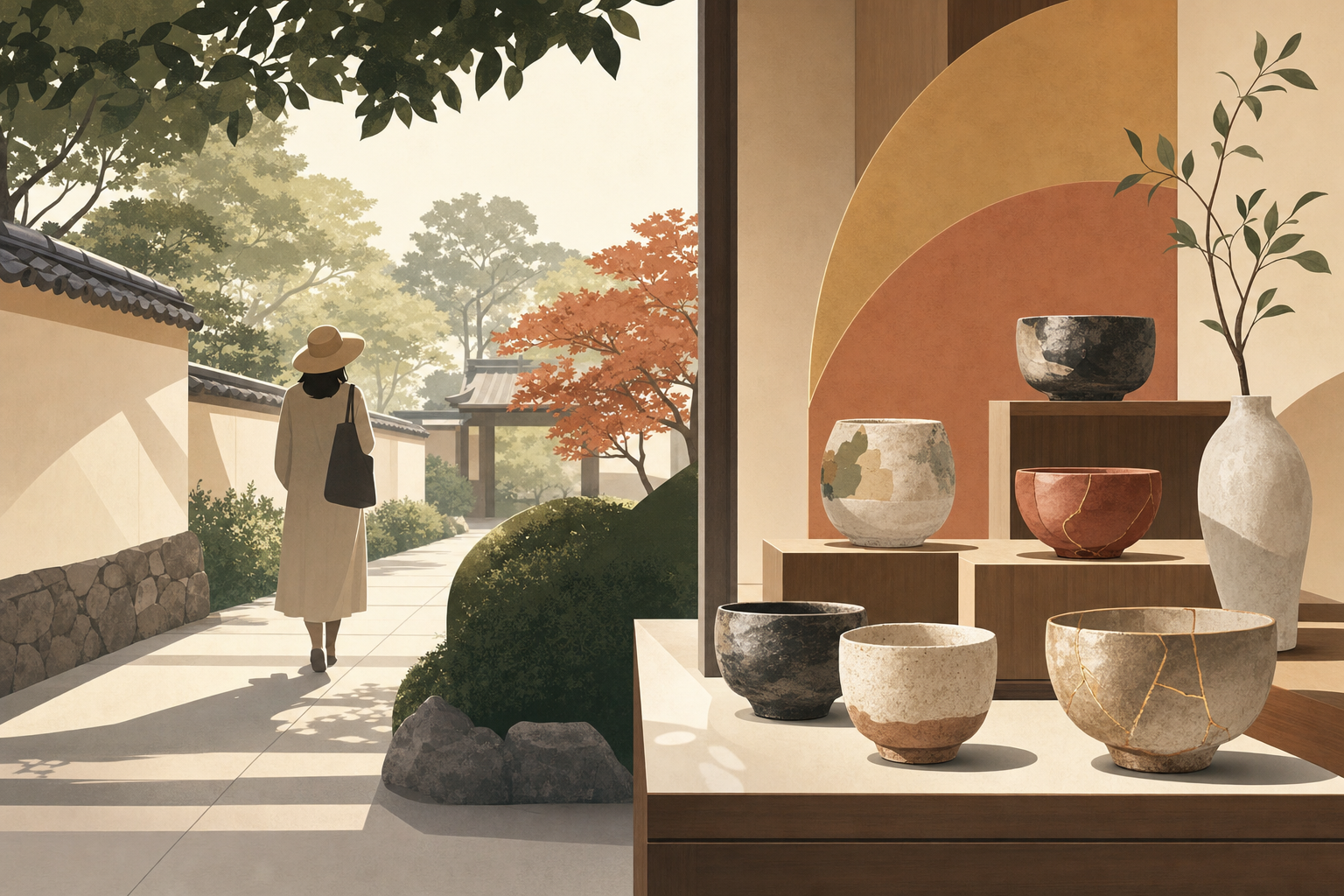
Sakai is closely associated with Sen no Rikyū, the 16th-century tea master whose ideas shaped Japanese tea culture.
Start at Sakai Higashi Station on the Nankai Kōya Line, then walk roughly 10 minutes to the Sakai Plaza of Rikyu and Akiko.
Its exhibits provide useful background before a tea-related program or local tea room visit; check the current schedule because workshops and demonstrations are not necessarily daily.
From Tennoji, take the JR Osaka Loop Line to Shin-Imamiya in a few minutes, transfer to Nankai, and reach Sakai Higashi in roughly 20 minutes overall, allowing for the connection. It is an easy half-day.
The old city is quieter than Namba, with tram bells, shop curtains, and fewer neon signs.
For a serious lesson, ask whether the host belongs to a tea school and whether the session is observation, instruction, or a formal guest experience. These are different things, and honest organisers will explain them.
How do you book without ending up with a rushed tourist activity?
Choose the format first, then the provider. A polished photo package can be enjoyable, but may not be what you mean by a traditional tea ceremony. Read duration and inclusions carefully.
Check these five details before you reserve
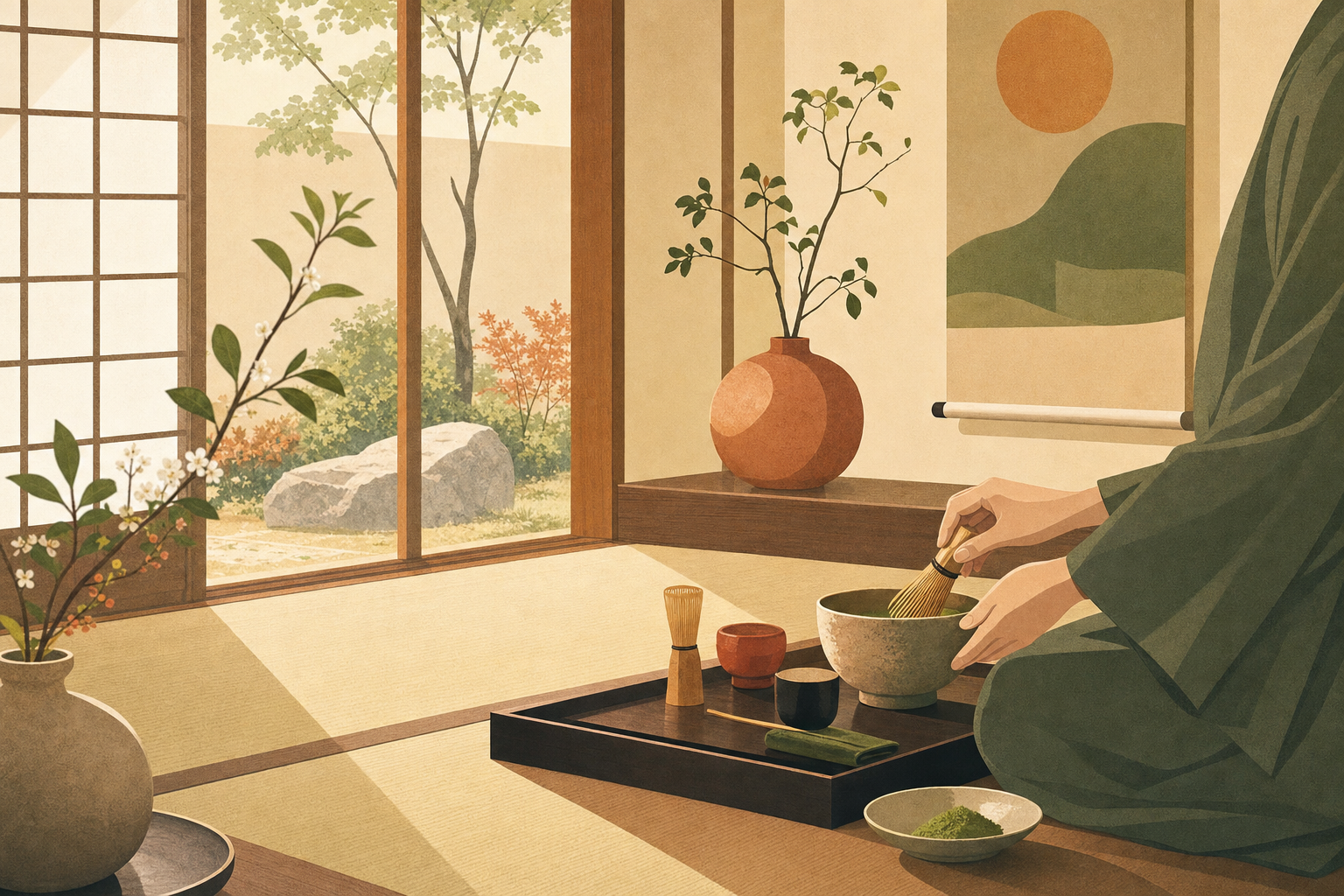
A “tea experience” may mean anything from a short matcha-making counter to a hosted ceremony in a tatami room. Neither is automatically wrong; they suit different travellers.
Language and explanation
Confirm whether the instruction is in English, Japanese, or supported by a written guide.
Seating and access
Ask about chairs, stairs, toilets, and floor seating for children or multi-generation groups.
Group format
“Private” may mean a private room, while others may join the same time slot; clarify this.
Photography rules
Some tea rooms limit photos during the ceremony, particularly around utensils or the host’s preparation.
Avoid the final slot of a packed sightseeing day. If you arrive late from Universal Studios Japan or a delayed shinkansen, the tea room’s calm rhythm becomes another deadline.
Morning or early afternoon is usually better, before tired feet and dinner plans take over.
A simple half-day route from Teradacho or Tsuruhashi
From Teradacho, the JR Osaka Loop Line reaches Tennoji in about 2 minutes; from there, Osaka Metro Midosuji Line trains reach Namba in roughly 6 minutes. From Tsuruhashi, Kintetsu trains to Osaka-Namba take about 6 minutes.
Add walking and station-navigation time, especially with prams or luggage.
Morning market
Arrive at Kuromon Market around 9:00 for breakfast and browsing while the lanes are easier to move through.
Late-morning tea
Reserve a 10:30 or 11:00 ceremony near Namba; eat lightly beforehand so you can enjoy the sweet and matcha.
Slow afternoon
Walk to Hozenji Yokocho, then choose Shinsaibashi shopping or return via Tennoji for Abeno Harukas and dinner.
Kuromon’s grilled seafood and soy glaze are tempting, but do not turn breakfast into a full food crawl before matcha. A small meal is enough.
Which Osaka tea-ceremony option suits your trip?
The right option depends on convenience, historical context, privacy, or keeping everyone together.
Namba guided tea session
Near Namba or Osaka-Namba Station; usually 60–90 minutes and suited to first-time visitors fitting tea between Kuromon Market and Dotonbori.
Sakai tea-history half-day
Start at Sakai Higashi Station on the Nankai Kōya Line; good for travellers who want Rikyū context and a quieter pace than central Osaka.
Private family or group session
Ask a Namba-area host about a private slot, chair seating, and age guidance; useful when you need one explanation for everyone.
Kyoto day-trip ceremony
From Osaka-Umeda or Yodoyabashi, Kyoto is roughly 30–45 minutes by train depending on route; worthwhile only if tea is a main purpose, not a side activity.
CONTEXTED 大阪 as a group base
A whole-house stay in the Teradacho/Tsuruhashi area, sleeping up to 23 guests; practical for families and groups splitting toward Namba, Sakai, Tennoji, or Tsuruhashi rather than dividing across hotel rooms.
For a group comparing space and dates, you can [Check availability & rates] and confirm current details before finalising your tea booking.
Is a hotel easier than a whole-house stay for this kind of trip?
“Isn’t a hotel easier?” For two people taking one tea class, it may be. For larger or multi-generation groups, separate rooms can fragment breakfast timing, meeting after the ceremony, storing shopping, and choosing dinner.
My local view is that Osaka is compact enough that a central address is not everything. A place where everyone can regroup may serve a group better than paying extra to sleep beside the busiest signboards.
From the Teradacho/Tsuruhashi side, you can reach Tennoji quickly, Namba without much trouble, and return for yakiniku or Korean groceries.
At Tsuruhashi, the grilling smell hits as soon as you leave the station—a sharp change after quiet matcha.
FAQ
** A: Introductory group sessions commonly cost around ¥3,000–¥7,000 per person. Private sessions, kimono rental, and longer lessons may cost more; confirm inclusions and cancellation terms.
Q: Do I need to wear a kimono for tea ceremony? A: No. Clean socks and modest, comfortable clothing are enough. Kimono rental is optional where offered.
Q: Can children and older relatives take part? A: Usually, yes, if the organiser accepts their age range. Ask about chair seating, stairs, session length, and sweet ingredients.
** A: Choose Osaka for a short ceremony within a food-and-sightseeing day; choose Kyoto for a fuller tea-culture day and traditional districts. Sakai is Osaka’s stronger choice for Rikyū-related history.
Tea ceremony works best with space around it: a calm morning, a short walk, and no sprint to the next reservation.
If your group is using Osaka as a base, map the ceremony first, then choose the neighbourhood and room layout that make the rest of the day easy.
Current rates, dates, and house details can change, so check them before finalising your plan.
RESERVATION
A whole-house stay in Osaka for your group
Walkable to Tsuruhashi, Tennoji, Shinsekai, Dotonbori and Kuromon Market. Sleeps up to 23 — perfect for families and groups to book the entire house. Check availability and rates on the booking site.
Please confirm current rates, availability and amenities on the booking site.
Related articles